Mastering Agile Project Management: Strategies for Success

In today’s fast-paced business environment, traditional project management methodologies often struggle to keep up with rapidly changing requirements and market demands. This is where agile project management steps in as a transformative approach, offering flexibility, collaboration, and continuous improvement. Agile isn’t just a methodology; it’s a mindset that prioritizes adaptability and customer satisfaction, making it indispensable for modern organizations.
This comprehensive guide will delve into the core principles of agile project management, explore popular frameworks, and provide actionable strategies to help you successfully implement and master agile practices within your teams. Whether you’re a seasoned project manager or new to the agile world, understanding these concepts is crucial for delivering high-quality products and services efficiently.
What is Agile Project Management?
At its heart, agile project management is an iterative approach to delivering projects throughout their life cycle. Instead of a linear, sequential process, agile breaks projects down into smaller, manageable cycles called iterations or sprints. Each iteration involves cross-functional teams working collaboratively to deliver a potentially shippable increment of the product. This continuous feedback loop allows for rapid adaptation to changes, ensuring the final product truly meets customer needs.
The Agile Manifesto, created in 2001, outlines four core values and twelve supporting principles that guide agile development:
- Individuals and interactions over processes and tools
- Working software over comprehensive documentation
- Customer collaboration over contract negotiation
- Responding to change over following a plan
These values emphasize human interaction, functional output, customer involvement, and flexibility, which are cornerstones of effective agile project management.
Key Principles of Agile Project Management
To truly harness the power of agile project management, it’s essential to understand its underlying principles. These principles are designed to foster an environment of continuous delivery, stakeholder engagement, and team empowerment:
Customer Satisfaction Through Early and Continuous Delivery
Agile prioritizes delivering valuable software to the customer frequently, from a couple of weeks to a couple of months, with a preference to the shorter timescale. This ensures that customers see progress, provide feedback, and feel involved in the development process, leading to higher satisfaction and a product that aligns closely with their evolving needs.
Embracing Change
Unlike traditional methods that view change as a disruption, agile welcomes changing requirements, even late in development. This adaptability is one of agile’s greatest strengths, allowing teams to respond to market shifts, new insights, and competitive pressures without derailing the entire project.
Frequent Delivery of Working Software
The emphasis is always on working software as the primary measure of progress. This means teams aim to produce functional, tested increments regularly, rather than relying on extensive documentation or lengthy planning phases. This tangible output provides clear visibility into progress and allows for early detection of issues.
Collaboration Between Business and Developers
Throughout the project, business stakeholders and developers must work together daily. This close collaboration ensures that everyone is aligned on goals, understands the requirements, and can quickly resolve any ambiguities, fostering a shared sense of ownership and responsibility.
Motivated Individuals and Trust
Agile projects are built around motivated individuals. Give them the environment and support they need, and trust them to get the job done. Empowering teams, providing autonomy, and fostering a culture of trust are critical for high performance and innovation in agile project management.
Face-to-Face Conversation
The most efficient and effective method of conveying information to and within a development team is face-to-face conversation. While remote work has become prevalent, agile still champions direct communication for clarity, empathy, and quicker decision-making.
Sustainable Development
Agile processes promote sustainable development. The sponsors, developers, and users should be able to maintain a constant pace indefinitely. This focus on long-term sustainability prevents burnout and ensures consistent productivity.
Technical Excellence and Good Design
Continuous attention to technical excellence and good design enhances agility. Investing in code quality, refactoring, and sound architectural principles reduces technical debt and makes the system easier to adapt and maintain over time.
Simplicity
The art of maximizing the amount of work not done – simplicity – is essential. Agile encourages teams to focus on delivering only what is necessary, avoiding unnecessary features or complexities that don’t add significant value.
Self-Organizing Teams
The best architectures, requirements, and designs emerge from self-organizing teams. Agile teams are empowered to decide how best to accomplish their work, fostering innovation, accountability, and a sense of ownership.
Regular Reflection and Adjustment
At regular intervals, the team reflects on how to become more effective, then tunes and adjusts its behavior accordingly. This continuous improvement mindset, often facilitated through retrospectives, is vital for long-term success in agile project management.
Popular Agile Frameworks
While the Agile Manifesto provides the guiding principles, several frameworks offer specific methodologies for implementing agile project management. The most popular ones include Scrum, Kanban, and Lean.
Scrum: The Most Widely Used Framework
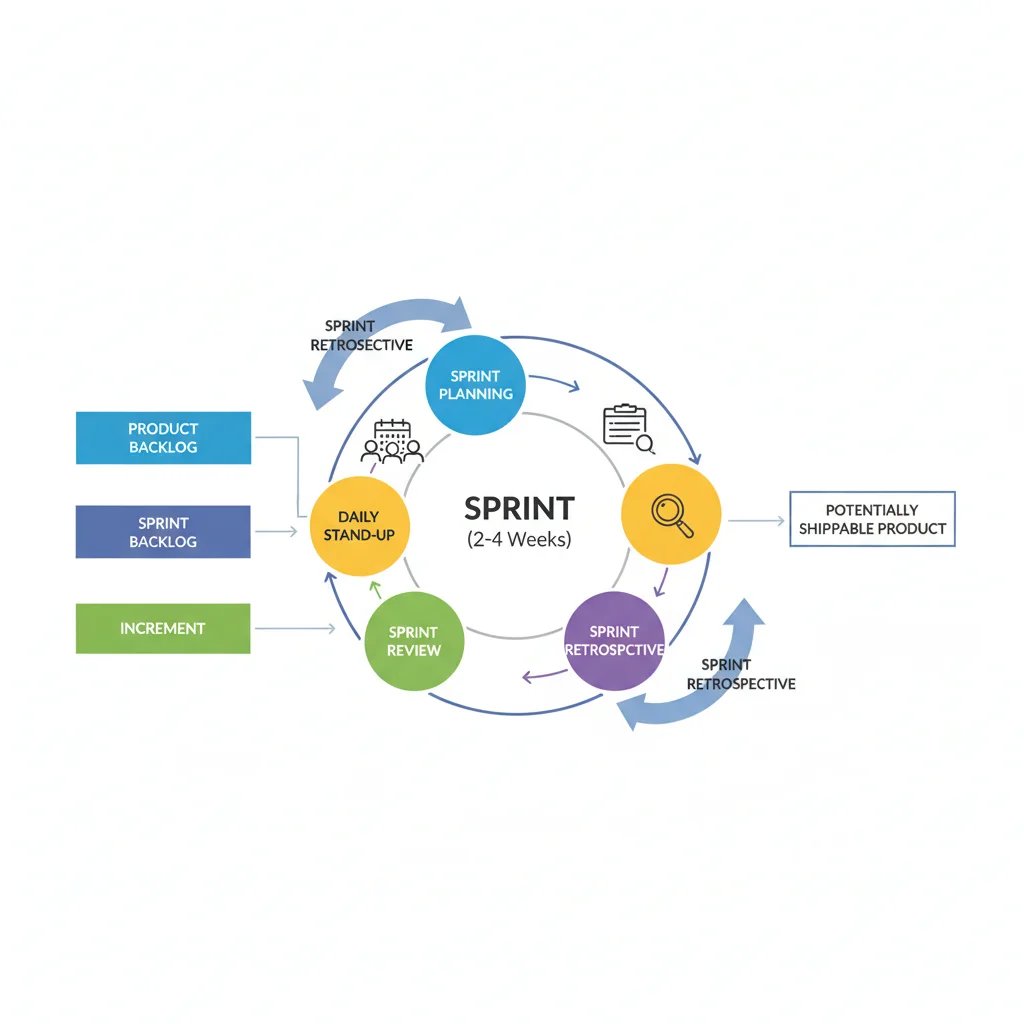
Scrum is an iterative and incremental agile framework for managing complex projects. It’s characterized by its use of fixed-length iterations called "sprints," typically lasting 1-4 weeks. Each sprint aims to produce a "Done," usable, and potentially releasable product increment.
Key roles in Scrum include:
- Product Owner: Represents the voice of the customer, defines product features, and manages the Product Backlog.
- Scrum Master: Facilitates the Scrum process, removes impediments, and coaches the team on agile practices.
- Development Team: A self-organizing, cross-functional group responsible for delivering the product increment.
Scrum also defines specific events:
- Sprint Planning: The team plans the work to be performed in the upcoming sprint.
- Daily Scrum (Stand-up): A short daily meeting for the Development Team to synchronize activities and plan for the next 24 hours.
- Sprint Review: The team demonstrates the completed work to stakeholders and gathers feedback.
- Sprint Retrospective: The team inspects how the last sprint went regarding individuals, interactions, processes, and tools, and identifies improvements for the next sprint.
Scrum’s structured yet flexible approach makes it highly effective for complex projects where requirements are likely to evolve. It promotes transparency, inspection, and adaptation, which are fundamental to successful agile project management.
Kanban: Visualizing Workflow
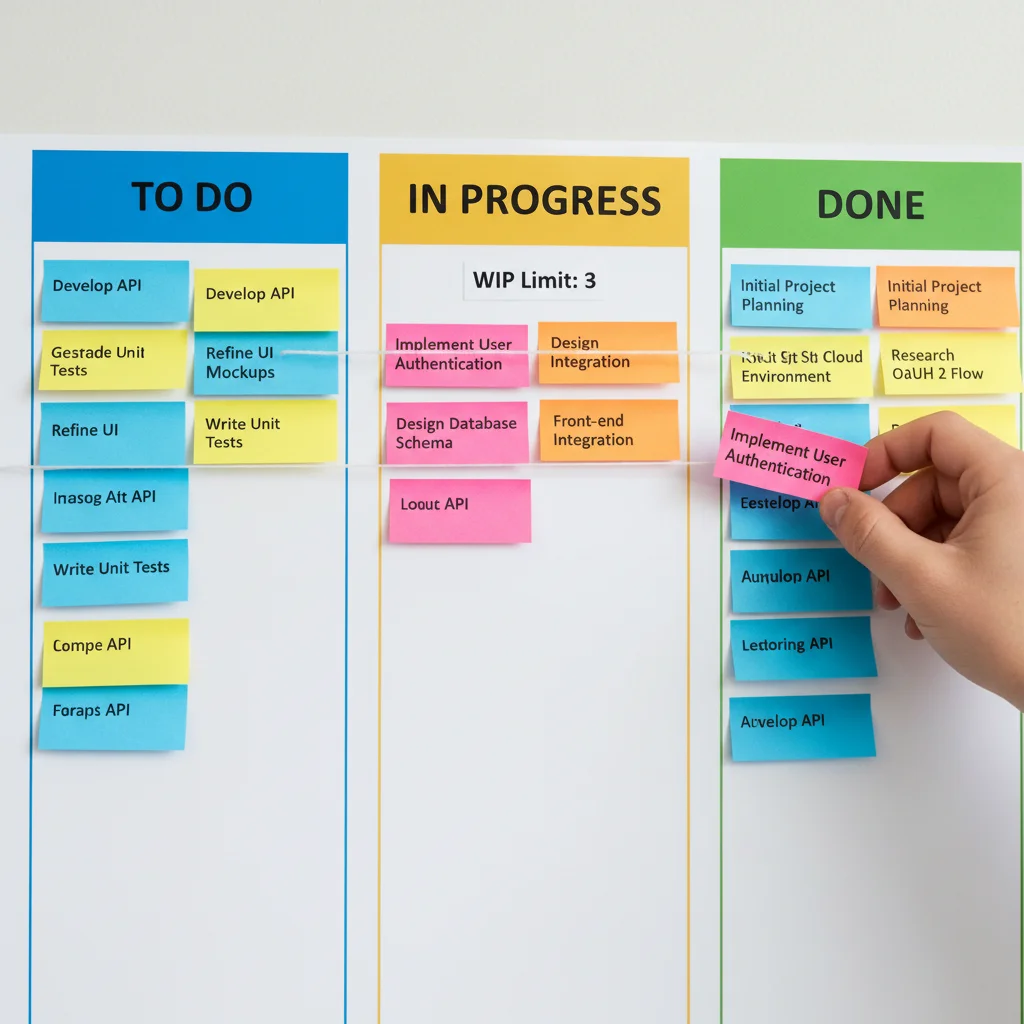
Kanban is another powerful agile framework focused on visualizing work, limiting work in progress (WIP), and maximizing efficiency. Originating from manufacturing, Kanban boards provide a clear visual representation of tasks as they move through different stages of a workflow.
Core principles of Kanban include:
- Visualize the workflow: Use a Kanban board with columns representing different stages of work (e.g., To Do, In Progress, Testing, Done).
- Limit Work in Progress (WIP): Set explicit limits on the number of items that can be in progress at each stage, preventing bottlenecks and encouraging completion.
- Manage flow: Monitor the flow of work and identify areas for improvement to optimize delivery.
- Make process policies explicit: Clearly define the rules for how work moves through the system.
- Implement feedback loops: Regularly review the process to ensure continuous improvement.
- Improve collaboratively, evolve experimentally: Encourage continuous, small, incremental changes based on data and team feedback.
Kanban is particularly well-suited for maintenance projects, support teams, or any environment where continuous delivery and managing a constant flow of work are critical. Its flexibility allows it to be applied in various contexts, making it a versatile tool in agile project management.
Lean Software Development: Eliminating Waste
Lean principles, derived from the Toyota Production System, focus on maximizing customer value while minimizing waste. When applied to software development, Lean emphasizes:
- Eliminating Waste: Identify and remove anything that doesn’t add value to the customer (e.g., unnecessary features, excessive documentation, waiting time).
- Amplify Learning: Encourage continuous learning and knowledge sharing within the team.
- Decide as Late as Possible: Defer decisions until the last responsible moment to allow for more information and flexibility.
- Deliver Fast: Aim for quick delivery of working software to get feedback sooner.
- Empower the Team: Give development teams the autonomy and responsibility to make decisions.
- Build Integrity In: Focus on creating high-quality, maintainable software.
- See the Whole: Understand the entire system and optimize the flow of value from end to end.
While not a strict methodology like Scrum, Lean provides a powerful set of principles that can be integrated into any agile project management approach to enhance efficiency and value delivery.
Implementing Agile Project Management: Strategies for Success
Successfully adopting agile project management requires more than just understanding the frameworks; it demands a shift in mindset and organizational culture. Here are key strategies for effective implementation:
1. Start Small and Scale Gradually
Don’t try to transform your entire organization overnight. Begin with a pilot project or a small, dedicated team. This allows you to learn, adapt, and refine your agile practices before rolling them out more broadly. Scaling agile should be a deliberate process, building on early successes and lessons learned.
2. Foster a Culture of Trust and Transparency
Agile thrives on trust – trust in your team members to deliver, and trust from leadership to empower teams. Transparency in progress, challenges, and decisions builds this trust. Tools like visible Kanban boards or sprint burndown charts help maintain transparency across the project.
3. Prioritize Continuous Communication and Collaboration
Effective agile project management relies heavily on communication. Encourage daily stand-ups, regular stakeholder reviews, and open channels for feedback. Cross-functional teams working closely together can resolve issues quickly and ensure everyone is aligned on project goals.
4. Empower Self-Organizing Teams
Give your teams the autonomy to decide how they will achieve their goals. Self-organizing teams are more motivated, innovative, and accountable. Provide them with the necessary resources, remove impediments, and trust their expertise.
5. Embrace Iterative Development and Feedback Loops
The core of agile is iterative development. Deliver small, functional increments frequently and actively solicit feedback from users and stakeholders. Use this feedback to adapt and improve in subsequent iterations. This continuous loop ensures the product evolves to meet actual needs.
6. Focus on Value Delivery
Always keep the end customer and the value you’re delivering in mind. Prioritize features that provide the most significant value and continuously ask whether each task contributes to that value. This focus helps prevent scope creep and ensures efficient resource allocation.
7. Invest in Training and Coaching
Transitioning to agile can be challenging. Provide adequate training for your teams on agile principles, specific frameworks (like Scrum or Kanban), and relevant tools. Consider bringing in an agile coach to guide your organization through the initial stages and help embed agile practices.
8. Use Appropriate Tools
While agile emphasizes individuals and interactions over tools, the right tools can significantly support agile project management. Project management software like Jira, Trello, Asana, or Azure DevOps can help with backlog management, task tracking, visualization, and reporting. Choose tools that fit your team’s needs and workflow.
9. Conduct Regular Retrospectives
Retrospectives are critical for continuous improvement. After each sprint or significant project phase, gather your team to reflect on what went well, what could be improved, and what actions to take in the next cycle. This commitment to learning and adaptation is a hallmark of successful agile teams.
10. Be Adaptable and Flexible
The irony of agile is that while it provides structure, its ultimate goal is flexibility. Be prepared to adapt your processes, tools, and even your interpretation of agile principles as you learn what works best for your specific team and organization. There’s no one-size-fits-all solution in agile project management.
Common Challenges and How to Overcome Them
While agile project management offers numerous benefits, its implementation can come with challenges. Recognizing these and having strategies to overcome them is key to success.
Resistance to Change
Many individuals and organizations are accustomed to traditional, command-and-control structures. Agile’s emphasis on self-organization and continuous adaptation can be unsettling. Overcome this by:
- Clear Communication: Explain the ‘why’ behind the agile transition and its benefits.
- Pilot Programs: Demonstrate success with small teams to build confidence.
- Training and Support: Equip individuals with the skills and knowledge needed for agile.
- Leadership Buy-in: Ensure leaders champion the change and model agile behaviors.
Lack of Stakeholder Engagement
Agile requires active involvement from stakeholders, especially the Product Owner. If stakeholders are not engaged, the team may build the wrong product or miss critical feedback. Address this by:
- Educating Stakeholders: Explain their role and the importance of their input.
- Regular Demos: Schedule frequent sprint reviews to showcase progress and solicit feedback.
- Clear Communication Channels: Establish easy ways for stakeholders to provide input.
Difficulty in Estimating and Planning
Traditional fixed-scope, fixed-time, fixed-cost contracts don’t fit well with agile’s flexible nature. Agile uses different approaches to planning and estimating. Mitigate this by:
- Relative Sizing: Use techniques like story points for estimation rather than hours.
- Release Planning: Plan at a higher level for releases, not just sprints.
- Forecasting: Use historical data (velocity) to predict future delivery capacity.
- Transparent Backlogs: Maintain a well-groomed, prioritized Product Backlog.
Scope Creep vs. Agile Flexibility
While agile embraces change, it’s crucial to manage scope effectively within sprints. Uncontrolled changes can lead to missed sprint goals. Manage this by:
- Well-Defined Sprint Goals: Ensure the team commits to a clear, achievable goal for each sprint.
- Product Owner Role: The Product Owner is responsible for prioritizing and protecting the sprint backlog from external changes during a sprint.
- Backlog Refinement: Continuously refine and prioritize the Product Backlog to ensure readiness for future sprints.
Scaling Agile in Large Organizations
Applying agile to multiple teams or large, complex projects can be challenging. Frameworks like SAFe (Scaled Agile Framework), LeSS (Large-Scale Scrum), or Scrum@Scale can help. Key considerations include:
- Alignment: Ensure all teams are working towards a common vision and goals.
- Coordination: Establish mechanisms for inter-team communication and dependency management.
- Leadership Support: Strong leadership is essential to drive and sustain large-scale agile transformations.
Measuring Success in Agile Project Management
How do you know if your agile project management efforts are paying off? Traditional metrics might not fully capture agile’s benefits. Focus on metrics that reflect agility, value delivery, and team health:
- Velocity: Measures the amount of work (e.g., story points) a team completes in a sprint. It helps with forecasting and capacity planning.
- Lead Time and Cycle Time: For Kanban, these measure the time from when a task enters the system to when it’s completed (lead time) and the time it spends actively being worked on (cycle time). Lower times indicate greater efficiency.
- Burn-down/Burn-up Charts: Visual representations of work remaining or work completed, tracking progress towards sprint or release goals.
- Customer Satisfaction: Regularly collect feedback through surveys, interviews, or Net Promoter Score (NPS) to gauge customer happiness.
- Defect Density: The number of defects found per unit of work, indicating product quality.
- Team Morale and Engagement: Happy, engaged teams are more productive. Use surveys or qualitative feedback to assess team health.
- Business Value Delivered: Track whether the features delivered translate into tangible business outcomes (e.g., increased revenue, improved user engagement).
These metrics provide a holistic view of project health and allow for continuous improvement, a core tenet of agile project management.
The Future of Agile Project Management
Agile project management is not a static concept; it continues to evolve. As organizations face new challenges and opportunities, agile practices are adapting. Key trends include:
- Hybrid Approaches: Combining agile with elements of traditional project management for projects that require a blend of flexibility and predictability.
- Agile Beyond Software: Applying agile principles to non-IT departments like HR, marketing, and operations, recognizing its universal benefits for managing change and delivering value.
- AI and Machine Learning in Agile: Leveraging AI for better forecasting, automated reporting, and identifying patterns in project data to enhance decision-making.
- Focus on Business Agility: Moving beyond team-level agile to transform entire organizations, enabling them to respond quickly to market changes and seize new opportunities.
- Distributed Agile Teams: Refining practices for remote and geographically dispersed agile teams, emphasizing effective communication tools and strategies.
These trends highlight the enduring relevance and adaptability of agile project management as a strategic imperative for organizations aiming to thrive in complex, dynamic environments.
Conclusion
Agile project management is more than just a set of tools or ceremonies; it’s a profound cultural shift that prioritizes people, collaboration, customer value, and responsiveness to change. By embracing its core principles and frameworks like Scrum and Kanban, organizations can significantly enhance their ability to deliver successful projects, foster innovation, and maintain a competitive edge.
Mastering agile requires continuous learning, adaptation, and a commitment to improvement. While challenges may arise, the benefits of increased flexibility, higher customer satisfaction, and empowered teams far outweigh them. By implementing the strategies outlined in this guide, you can confidently navigate the complexities of modern project delivery and lead your teams to greater success in the realm of agile project management.
Start your agile journey today, and witness the transformative power of this dynamic approach to project delivery. The future of successful project execution is undoubtedly agile.