From Runway to Reality: 3 Key Micro-Trends Discovered for U.S. Street Style in Early 2026
The fashion landscape is a constantly evolving tapestry, woven with threads of innovation, cultural shifts, and individual expression. As we gaze into the crystal ball of early 2026, it’s clear that U.S. street style is undergoing a fascinating transformation. Forget the broad strokes of yesteryear; today, it’s all about the ‘micro-trend’ – subtle yet powerful shifts that dictate what’s truly chic on the sidewalks of New York, the boulevards of Los Angeles, and the eclectic streets of Austin. These aren’t just fleeting fads; they are indicators of deeper societal values and technological advancements influencing how we dress and present ourselves.
Our meticulous research, combining trend forecasting data, social media analytics, and direct observation, has uncovered three pivotal micro-trends that are poised to define U.S. street style in the coming months. These trends reflect a growing consciousness about sustainability, an increasing integration of technology into daily life, and a fluid approach to personal identity. Understanding these shifts is crucial for anyone looking to stay ahead in the dynamic world of fashion, whether you’re a designer, a retailer, or simply a style enthusiast eager to refresh your wardrobe.
This article will delve deep into each of these micro-trends, exploring their origins, key characteristics, and how they are manifesting in real-world U.S. street style. We’ll provide actionable insights and examples to help you navigate these exciting new directions. So, buckle up and prepare to explore the future of fashion, as we dissect the most impactful elements shaping U.S. street style for early 2026.
Advertisements
Micro-Trend 1: The Rise of ‘Eco-Chic Upcycling’ in U.S. Street Style
Sustainability in fashion is no longer a niche concept; it’s a driving force, and in early 2026, it’s manifesting as ‘Eco-Chic Upcycling’ within U.S. street style. This isn’t just about choosing organic cotton; it’s about a visible commitment to circular fashion through creative reuse and repurposing. Consumers are increasingly aware of fashion’s environmental footprint, and this awareness is translating into a demand for unique, consciously crafted pieces that tell a story.
What is Eco-Chic Upcycling?
Eco-Chic Upcycling goes beyond simple recycling. It involves transforming discarded items, vintage finds, or even existing wardrobe pieces into new, fashionable garments or accessories. Think patchwork denim made from multiple pairs of old jeans, redesigned vintage blazers with modern embellishments, or statement accessories crafted from industrial waste materials. The key is that the upcycled nature is often visible and celebrated, becoming a badge of honor for the wearer.
This trend is gaining traction because it offers a twofold benefit: environmental responsibility and unique personal style. In a world saturated with mass-produced clothing, upcycled pieces offer individuality and a narrative. They are inherently limited edition, making them highly desirable for those who wish to stand out from the crowd. The aesthetic often leans towards an artisanal, handcrafted feel, blending perfectly with a growing appreciation for craftsmanship.
How It’s Shaping U.S. Street Style
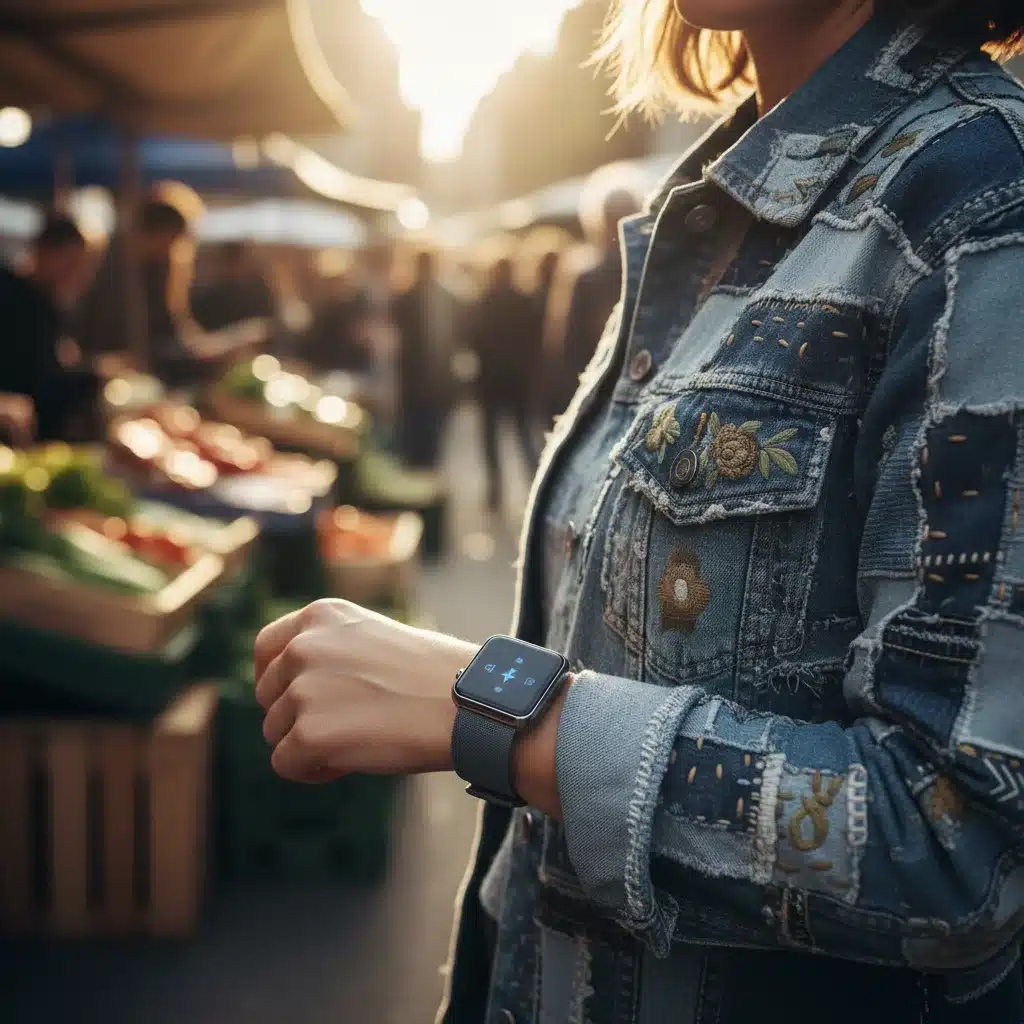
On the streets, we’re observing a proliferation of garments that proudly display their upcycled origins. Denim, in particular, is a canvas for this trend, with intricate patchworks, deconstructed seams, and hand-painted details transforming ordinary jeans and jackets into wearable art. Beyond denim, vintage sportswear is being reimagined with contemporary cuts and unexpected pairings. Accessories like bags made from old seatbelts or jewelry from repurposed electronics are also making a significant impact, adding an edgy, conscious touch to everyday outfits.
The influence of DIY culture and social media platforms, where creators share their upcycling projects, has significantly fueled this micro-trend. It’s empowering individuals to become co-creators of their fashion, fostering a deeper connection to their clothing. This shift in U.S. street style signifies a move away from fast fashion’s disposability towards a more thoughtful, creative, and sustainable approach to dressing.
Brands, both established and emerging, are also tapping into this trend. We’re seeing capsule collections featuring upcycled materials, collaborations with upcycling artists, and even workshops encouraging consumers to customize their own garments. This institutional embrace further solidifies Eco-Chic Upcycling as a significant force in early 2026 U.S. street style.
Micro-Trend 2: Seamless ‘Tech-Integrated Apparel and Accessories’
As technology becomes more ubiquitous, its integration into our daily lives extends naturally into our wardrobes. In early 2026, U.S. street style is witnessing the rise of ‘Tech-Integrated Apparel and Accessories’ – not as futuristic costumes, but as subtle, functional, and aesthetically pleasing additions that enhance everyday living. This micro-trend is about seamless integration, where technology serves a purpose without dominating the visual appeal of an outfit.
The Evolution of Wearable Tech
Gone are the days of bulky smartwatches and clunky Google Glass. The new wave of tech integration is sleek, discreet, and often multi-functional. We’re talking about fabrics that regulate temperature, smart jewelry that monitors health metrics, jackets with integrated charging ports, and shoes that adapt to different terrains. The focus is on utility and comfort, making technology an invisible assistant rather than a flashy gadget.
This evolution is driven by advancements in miniaturization, flexible electronics, and battery life. Designers are collaborating with tech companies to create garments and accessories where the technology is almost imperceptible, blending seamlessly with the aesthetic. The goal is to provide convenience and enhanced experiences without compromising on style, which is critical for adoption in U.S. street style.
Impact on U.S. Street Style
How does this manifest on the streets? Consider smart sneakers that track your steps and provide real-time gait analysis, yet look like a designer pair. Or perhaps a minimalist tote bag with an integrated solar panel to charge your devices on the go, designed with premium materials. We’re also seeing subtle LED elements woven into casual wear for enhanced visibility at night, or smart fabrics that respond to body temperature, ensuring optimal comfort in varying urban environments.
The appeal lies in the smart functionality without sacrificing personal style. For the modern urbanite, efficiency and connectivity are paramount. Tech-integrated apparel and accessories cater to this need, offering solutions that fit effortlessly into a busy lifestyle. This micro-trend suggests a future where our clothing does more than just cover us; it actively assists us, making our lives more convenient and connected, all while maintaining a high level of aesthetic sophistication in U.S. street style.
Furthermore, the data privacy and security aspects of wearable tech are becoming increasingly important. As this micro-trend matures, consumers are looking for transparency and control over their personal data, pushing manufacturers to develop secure and ethical tech-infused fashion items.
Micro-Trend 3: ‘Fluidity in Form and Expression’ – Gender-Neutral Aesthetics
The third significant micro-trend shaping U.S. street style in early 2026 is ‘Fluidity in Form and Expression,’ which translates into a widespread embrace of gender-neutral aesthetics. This movement transcends traditional gender binaries in clothing, favoring silhouettes, colors, and styling that can be worn and appreciated by anyone, regardless of their gender identity. It’s a powerful statement about inclusivity, self-expression, and breaking down outdated norms.
Beyond Androgyny: A New Era of Freedom
While androgyny has long been a part of fashion, ‘Fluidity in Form and Expression’ takes it a step further. It’s less about erasing gender and more about expanding the possibilities of self-presentation. This trend is characterized by oversized silhouettes, relaxed fits, versatile layering pieces, and a palette that often eschews traditionally gendered colors. Think tailored trousers that drape elegantly on any body type, oversized blazers that offer a powerful yet comfortable look, and accessories that defy categorization.
This shift is deeply rooted in broader societal conversations around gender identity and expression. Younger generations, in particular, are rejecting rigid classifications and embracing a more expansive view of who they are and how they choose to present themselves. Fashion, as a primary tool for self-expression, is naturally reflecting this profound cultural evolution.
Manifestations in U.S. Street Style
On the streets, this micro-trend is evident in the blurring of lines between what was once considered ‘men’s’ and ‘women’s’ wear. We see individuals confidently sporting pieces that were traditionally assigned to a different gender, not as a statement of rebellion, but as a natural extension of their personal style. For example, men are increasingly incorporating skirts and flowy blouses into their everyday outfits, while women are embracing sharp, masculine tailoring with renewed vigor.
Brands are responding by designing collections that are inherently gender-neutral, focusing on fit and fabric rather than arbitrary gender assignments. Retail spaces are also adapting, with many stores moving away from separate ‘men’s’ and ‘women’s’ sections towards more integrated displays. This creates a more inclusive and welcoming shopping experience, reflecting the diverse reality of U.S. street style.

The emphasis is on comfort, versatility, and personal authenticity. Pieces that can be styled in multiple ways and adapt to various contexts are highly valued. This micro-trend encourages experimentation and celebrates the idea that clothing should empower individuals to express their true selves, free from societal expectations. It’s a liberating and exciting direction for U.S. street style.
The Interplay of Micro-Trends: A Holistic View of U.S. Street Style 2026
While we’ve explored these three micro-trends – Eco-Chic Upcycling, Tech-Integrated Apparel and Accessories, and Fluidity in Form and Expression – as distinct phenomena, it’s crucial to understand that they often intersect and influence one another. The most compelling U.S. street style looks in early 2026 will likely be those that cleverly combine elements from two or even all three of these trends.
Imagine an upcycled, gender-neutral denim jacket (Eco-Chic Upcycling + Fluidity in Form and Expression) with discreetly integrated heating elements for comfort in changing weather (Tech-Integrated Apparel). Or a pair of wide-leg, sustainably sourced trousers (Eco-Chic Upcycling + Fluidity in Form and Expression) featuring a smart pocket that wirelessly charges your phone (Tech-Integrated Accessories). These combinations are where true innovation and personal style will shine.
The convergence of these trends speaks to a more conscious, connected, and inclusive future for fashion. Consumers are not just buying clothes; they are investing in values, functionality, and expressions of identity. This holistic approach to dressing is what makes U.S. street style in early 2026 particularly exciting and dynamic.
Sustainability as a Foundation
It’s worth noting that sustainability, as embodied by Eco-Chic Upcycling, serves as an underlying current for many emerging trends. Even tech-integrated garments are increasingly expected to be produced ethically and with minimal environmental impact. The conscious consumer of 2026 demands not just style and functionality, but also a clear conscience regarding their fashion choices. This pressure is driving brands across all segments to adopt more sustainable practices, from material sourcing to production processes and end-of-life considerations for garments.
The longevity of a garment, its repairability, and its potential for upcycling are becoming key selling points. This is a significant departure from the fast-fashion model and signals a more mature and responsible approach to consumption within U.S. street style. The ‘new luxury’ often lies in the story behind the garment, its ethical credentials, and its unique, handcrafted nature.
Technology as an Enabler
Technology, on the other hand, is becoming an enabler for both sustainability and fluidity. Smart textiles can reduce the need for frequent washing, extending garment life and conserving water. Digital platforms facilitate the discovery of independent upcycling artists and gender-neutral brands. Augmented reality (AR) try-on experiences allow consumers to experiment with different styles and gender expressions virtually, promoting creative freedom without physical waste.
The seamless integration of technology means that fashion is becoming more intuitive and responsive to our needs. From garments that track our fitness to accessories that keep us connected, the convenience offered by tech-infused fashion is undeniable. However, the challenge for designers will be to ensure this technology remains an enhancement, not a distraction, and that it genuinely adds value to the wearer’s experience without compromising on aesthetic appeal or ethical considerations.
Fluidity as a Cultural Imperative
Finally, fluidity in form and expression is not just a passing trend; it’s a cultural imperative that reflects a more inclusive and accepting society. This movement is challenging the very foundations of traditional fashion categorization, pushing designers to think beyond binary constraints. It’s about creating clothing that allows for individual interpretation and authentic self-expression, celebrating the diverse spectrum of human identity.
The impact of this micro-trend extends beyond just clothing. It influences marketing campaigns, retail environments, and even the language used to describe fashion. Brands that successfully embrace gender-neutral aesthetics are seen as progressive and relevant, resonating strongly with a younger, more diverse consumer base that values authenticity and inclusivity above all else. This shift is fundamental to the future of U.S. street style, ensuring it remains a dynamic and representative reflection of contemporary society.
Conclusion: Embracing the Future of U.S. Street Style
The U.S. street style scene in early 2026 is shaping up to be a compelling blend of conscious choices, intelligent design, and unrestrained self-expression. The three micro-trends – Eco-Chic Upcycling, Tech-Integrated Apparel and Accessories, and Fluidity in Form and Expression – are not merely stylistic choices; they are reflections of a broader cultural evolution towards sustainability, connectivity, and inclusivity.
For individuals, these trends offer exciting opportunities to experiment with personal style, make more responsible fashion choices, and embrace clothing that truly represents who they are. For brands and designers, understanding these shifts is paramount to creating relevant, desirable, and impactful collections that resonate with the modern consumer.
As we move further into the decade, expect these micro-trends to evolve and intertwine even more, creating a rich and diverse tapestry of U.S. street style. The future of fashion is not just about what we wear, but why we wear it, how it’s made, and what it communicates about our values and identities. Staying attuned to these subtle yet powerful shifts is key to remaining stylish, relevant, and ahead of the curve in the ever-dynamic world of fashion.
Embrace the upcycled, get smart with your tech, and express yourself without boundaries. The streets of America are ready for your unique interpretation of these defining early 2026 U.S. street style trends.