Digital Fashion Trends: Influencing Physical Styles in the US by 2026
The fashion landscape is undergoing a monumental transformation, driven by an unprecedented surge in technological innovation. What was once confined to the physical realm of ateliers, runways, and retail stores is now expanding into the digital frontier, creating a parallel universe of style and expression. This phenomenon, broadly termed digital fashion, is not merely a fleeting trend but a foundational shift that is reshaping how we conceive, create, consume, and interact with clothing. In the United States, a nation at the forefront of technological adoption and consumer culture, the impact of these digital fashion trends is particularly profound and is projected to significantly influence physical styles by 2026.
The allure of digital fashion lies in its boundless possibilities. Free from the constraints of physics, material availability, and production costs, digital garments can be fantastical, hyper-realistic, or utterly impossible in the physical world. This creative freedom appeals to designers, brands, and consumers alike, offering new avenues for self-expression, experimentation, and sustainability. As we delve deeper into this evolving domain, it becomes clear that digital fashion is not just about virtual clothing; it’s about a new paradigm for the entire industry.
This article will explore three pivotal digital fashion trends that are poised to leave an indelible mark on physical styles in the US by 2026: the rise of the metaverse as a fashion hub, the transformative power of AI in design and production, and the ubiquitous integration of virtual try-on technologies. Each of these trends, while distinct, is interconnected, contributing to a holistic evolution of the fashion ecosystem. Understanding their mechanisms and implications is crucial for anyone looking to navigate the future of style.
Advertisements
The Metaverse: A New Frontier for Fashion Expression
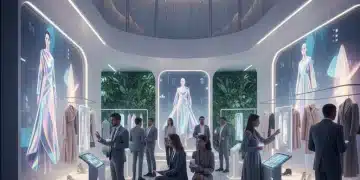
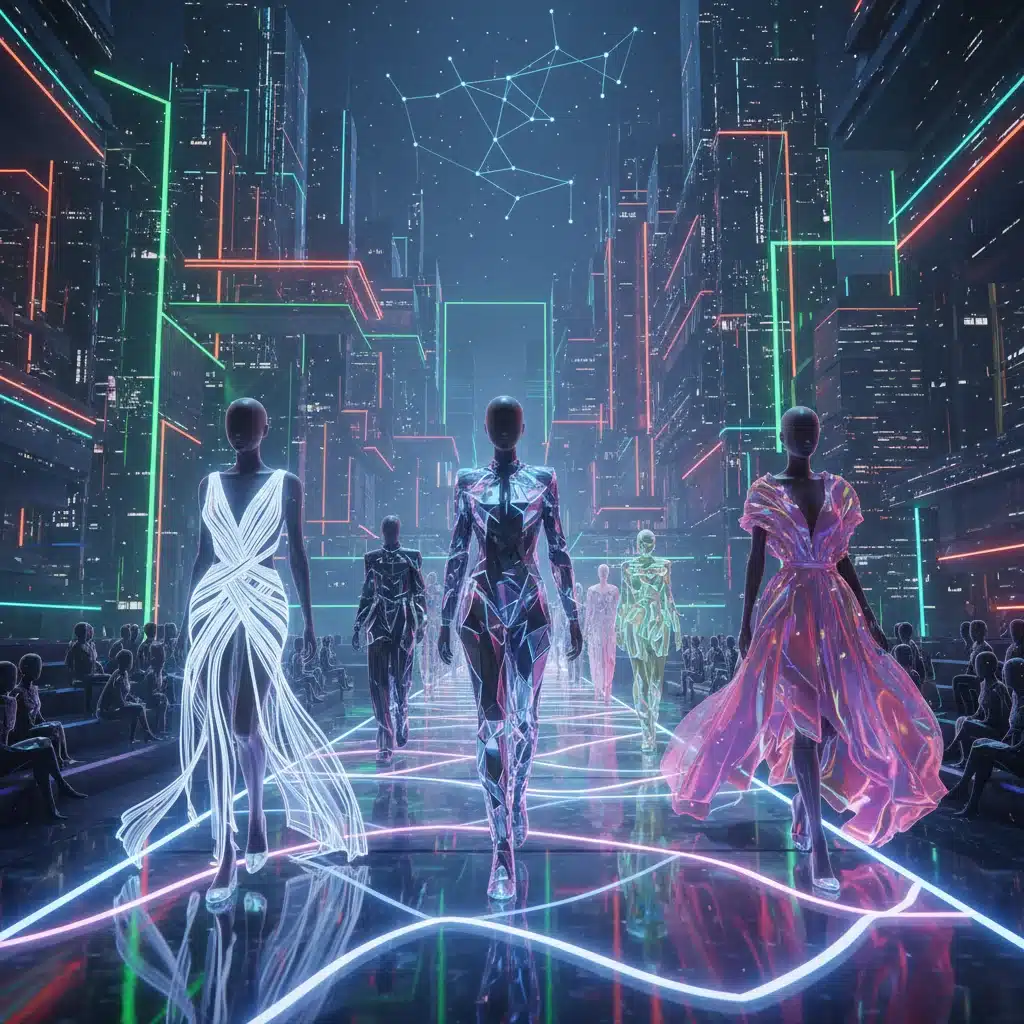
The metaverse, a persistent, interconnected virtual world, has rapidly emerged as a significant arena for fashion. It’s no longer just a gaming space; it’s a social, economic, and cultural platform where identities are crafted, communities are formed, and, increasingly, fashion statements are made. Brands, from luxury powerhouses to independent designers, are flocking to the metaverse to establish their presence, engaging with consumers in novel and immersive ways. This digital expansion is not just about selling virtual skins; it’s about influencing real-world aesthetics and consumer desires.
Virtual Wardrobes and Digital Identity
In the metaverse, avatars are extensions of our real-world selves, or perhaps even idealized versions. Just as physical clothing allows us to express our personality and affiliations, virtual garments enable a similar, often more exaggerated, form of self-expression. Consumers are investing in digital clothing for their avatars, from designer sneakers to haute couture gowns, to stand out in virtual social gatherings, concerts, and events. This burgeoning market for virtual wardrobes is directly influencing physical fashion in several ways.
- Trend Forecasting: What gains traction in the metaverse can often signal emerging trends in the physical world. Designers are using virtual spaces as testing grounds for new silhouettes, color palettes, and stylistic concepts, gauging consumer response before committing to physical production.
- Brand Engagement: Metaverse experiences offer brands an unparalleled opportunity for interactive engagement. Virtual pop-up stores, fashion shows, and gamified experiences create a deeper connection with consumers, fostering loyalty that translates to physical purchases.
- Democratization of Fashion: The metaverse lowers the barrier to entry for aspiring designers and allows consumers to access high fashion virtually, often at a fraction of the physical cost. This broadens exposure to diverse styles, which can then inspire physical fashion choices.
Metaverse-Inspired Physical Collections
By 2026, we can expect to see a clear feedback loop between metaverse fashion and physical collections. Brands will increasingly launch dual collections—digital garments for avatars and their physical counterparts for human wearers. This strategy allows consumers to embody their virtual identity in the real world, blurring the lines between digital and physical existence. For example, a particularly popular virtual accessory or garment might be fast-tracked into physical production due to high demand in the metaverse. This responsiveness to digital trends will make physical fashion more dynamic and consumer-driven.
Furthermore, the aesthetic of the metaverse—characterized by vibrant colors, futuristic designs, and often fantastical elements—is beginning to seep into physical fashion. Designers are drawing inspiration from the digital realm, incorporating iridescent fabrics, holographic prints, and exaggerated proportions into their physical collections. This cross-pollination ensures that physical fashion remains fresh, innovative, and reflective of contemporary digital culture.
AI in Fashion: From Design to Personalization
Artificial Intelligence (AI) is no longer a futuristic concept; it’s a powerful tool revolutionizing every stage of the fashion lifecycle, from initial design concepts to personalized consumer experiences. By 2026, AI’s influence on physical styles in the US will be pervasive, driving efficiency, fostering creativity, and tailoring fashion to individual preferences like never before.
AI-Powered Design and Trend Prediction
One of the most exciting applications of AI in fashion is its ability to assist in the design process. AI algorithms can analyze vast datasets of fashion imagery, historical trends, consumer preferences, and even social media sentiment to identify emerging patterns and predict future styles. This predictive capability allows designers to create collections that are highly relevant and likely to resonate with their target audience, reducing the risk of unsold inventory and promoting more sustainable production practices.
- Generative Design: AI can generate entirely new design concepts, color palettes, and fabric patterns based on specified parameters. This doesn’t replace human creativity but augments it, providing designers with an endless source of inspiration and accelerating the ideation phase.
- Optimized Production: AI can optimize garment patterns for efficient material usage, minimizing waste—a critical concern in the fashion industry. It can also predict manufacturing challenges, leading to smoother production processes.
- Hyper-Personalization: AI algorithms can analyze individual consumer data—purchase history, browsing behavior, style preferences—to recommend highly personalized clothing items. This level of personalization influences what consumers seek and ultimately what brands produce physically.
Sustainable Fashion through AI
The fashion industry has a significant environmental footprint, but AI offers powerful solutions for sustainability. By optimizing design and production, reducing waste, and predicting demand more accurately, AI contributes to a more circular and responsible fashion ecosystem. For instance, AI can help brands identify sustainable materials, trace supply chains for ethical sourcing, and even design garments for easier recycling. This shift towards more sustainable practices, driven by AI, will inevitably influence the types of physical garments available and the ethical considerations consumers prioritize when making purchases. By 2026, brands leveraging AI for sustainability will likely gain a significant competitive edge and shape consumer expectations for environmentally conscious fashion.

Virtual Try-Ons: Bridging the Digital-Physical Divide
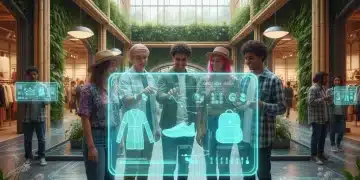
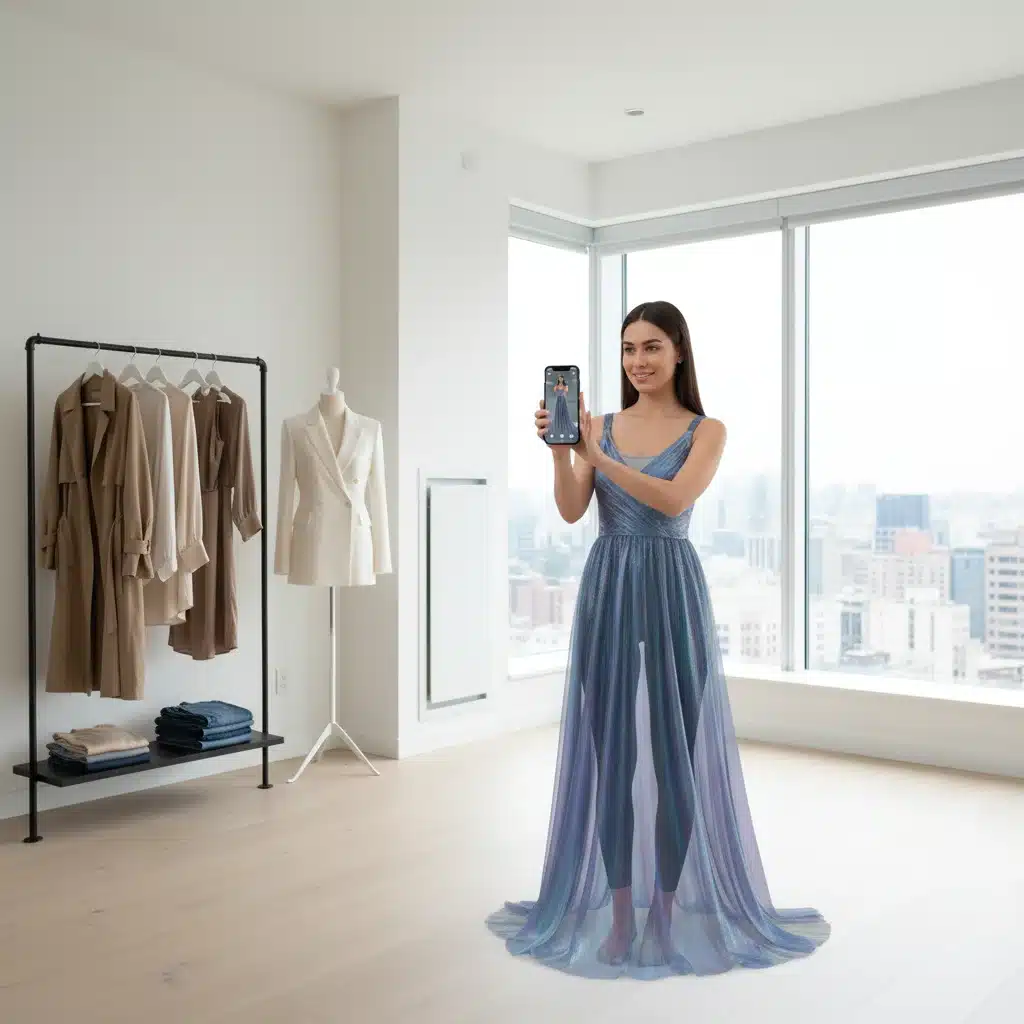
The ability to virtually try on clothing has been a long-held dream for both consumers and retailers. With advancements in augmented reality (AR) and 3D modeling, virtual try-on technologies are now becoming a mainstream reality, fundamentally altering the online shopping experience and, consequently, influencing physical styles. By 2026, these technologies will be an indispensable part of the retail landscape in the US, driving consumer confidence and shaping purchasing decisions.
Enhanced Online Shopping Experience
One of the biggest challenges of online clothing shopping has always been the inability to physically try on garments. This leads to uncertainty about fit, style, and appearance, resulting in high return rates. Virtual try-on solutions address this directly by allowing customers to see how a garment looks on their own body, or on a 3D avatar that accurately reflects their measurements, from the comfort of their home.
- Reduced Returns: By providing a more accurate representation of how clothing will fit and look, virtual try-ons significantly reduce product returns, which is a major cost and environmental burden for retailers. This efficiency encourages more online purchasing of physical items.
- Increased Confidence: Consumers feel more confident in their purchasing decisions when they can visualize the garment on themselves. This translates to higher conversion rates and greater satisfaction with physical purchases.
- Experimentation and Discovery: Virtual try-ons encourage consumers to experiment with styles they might not typically consider. Seeing a new color or silhouette virtually might inspire them to try it physically, broadening their fashion horizons and influencing their physical wardrobes.
Impact on Physical Retail and Product Development
While seemingly a digital tool, virtual try-ons have a tangible impact on physical retail and product development. In physical stores, smart mirrors equipped with AR technology allow customers to try on multiple outfits without changing, streamlining the in-store experience. This blend of digital convenience and physical interaction enhances the overall shopping journey.
From a product development perspective, data gathered from virtual try-ons can provide invaluable insights into consumer preferences regarding fit, style, and sizing. This data can inform future design decisions for physical garments, leading to more inclusive sizing, better-fitting clothes, and styles that are genuinely desired by the market. For example, if a particular digital garment is frequently ‘tried on’ but rarely purchased, it might indicate a design flaw that can be rectified in the physical version, or perhaps a style that is appealing virtually but not physically practical. This iterative feedback loop ensures that physical fashion evolves in response to real consumer needs and digital interactions.
The Symbiotic Relationship: Digital and Physical Fashion Converging
It’s crucial to understand that these digital fashion trends are not replacing physical fashion but rather enriching and transforming it. The relationship is symbiotic, with each realm influencing and inspiring the other. By 2026, the distinction between digital and physical fashion will become increasingly blurred, leading to a more integrated and dynamic fashion industry.
Co-Creation and Community
Digital platforms, especially within the metaverse, foster communities of fashion enthusiasts and creators. This environment encourages co-creation, where consumers can actively participate in the design process, providing feedback, customizing virtual garments, and even designing their own. This shift from passive consumption to active participation will empower consumers, making them more invested in the fashion choices that eventually manifest in physical collections. Brands that embrace this co-creative model will build stronger, more loyal customer bases, influencing physical styles based on community-driven insights.
Sustainability as a Core Driver
The digital realm offers inherent sustainability advantages. Creating virtual garments consumes no physical resources, produces no waste, and has a significantly lower carbon footprint compared to physical production. As consumers become more environmentally conscious, the appeal of digital fashion as a sustainable alternative or complement to physical clothing will grow. This heightened awareness, driven by digital fashion, will put increasing pressure on physical fashion brands to adopt more sustainable practices, influencing everything from material sourcing to production methods and end-of-life cycles for garments. The lessons learned and technologies developed in digital fashion will inevitably be applied to make physical fashion more sustainable.
Economic Implications and New Business Models
The rise of digital fashion trends also brings significant economic implications, fostering new business models that will directly impact physical fashion. The market for NFTs (Non-Fungible Tokens) in fashion, for instance, allows for digital ownership and scarcity, introducing a new layer of value to virtual assets. While these are digital, the prestige and exclusivity associated with owning a rare digital fashion NFT can translate into a desire for corresponding physical items or influence perceptions of brands in the physical world.
Furthermore, the ability to create and sell digital garments at a lower cost opens up entrepreneurship opportunities for designers who might not have the capital for physical production. This influx of new talent and diverse perspectives, initially honed in the digital space, will inevitably spill over into physical fashion, bringing fresh ideas and challenging traditional aesthetics. By 2026, we can expect to see more designers transitioning from purely digital creation to launching physical lines, directly influenced by their virtual successes.
Challenges and the Path Forward
While the future of digital fashion is bright, there are challenges to address. Interoperability between different metaverse platforms, intellectual property rights for digital designs, and ensuring equitable access to these technologies are critical considerations. However, the rapid pace of innovation suggests that solutions will emerge as the industry matures.
For brands and consumers in the US, embracing these digital fashion trends means staying agile, open to experimentation, and willing to redefine traditional notions of style. The convergence of digital and physical fashion offers a future where creativity is unbounded, self-expression is limitless, and sustainability is at the forefront. By 2026, the influence of digital fashion on our physical wardrobes will be undeniable, ushering in an exciting new era of style.
Conclusion: A Digitally Enhanced Future for Physical Styles
The impact of digital fashion trends on physical styles in the US by 2026 will be nothing short of revolutionary. The metaverse will serve as a fertile ground for trend forecasting and brand engagement, directly inspiring physical collections and aesthetics. AI will streamline design, enhance personalization, and drive sustainable practices across the industry. Virtual try-on technologies will empower consumers with greater confidence and choice, transforming the shopping experience both online and in brick-and-mortar stores.
As these three pivotal digital fashion trends continue to evolve and intertwine, they will foster a symbiotic relationship between the virtual and physical realms. This convergence promises a future where fashion is more inclusive, sustainable, personalized, and creatively expansive than ever before. For consumers, this means a richer, more interactive relationship with their clothing choices. For brands, it represents an imperative to innovate and adapt, leveraging digital tools to meet the demands of a digitally savvy and environmentally conscious market. The wardrobe of 2026 will undoubtedly reflect the profound and exciting influence of its digital counterpart, marking a new chapter in the enduring story of style.