SHEIN Product Trials: Eligibility, Applications, and Reviews
Introduction: Understanding the Product Trial Process
SHEIN product trials may offer qualifying shoppers an opportunity to experience selected merchandise and contribute firsthand evaluations of the items they receive.
However, taking part in a trial involves more than expressing interest in a particular product. Applicants should understand the applicable conditions, how requests are handled, and which responsibilities may accompany an approval.
Each opportunity can operate under its own guidelines. Factors such as inventory, account eligibility, shipping destinations, product variations, and submission periods may influence whether participation is possible.
Because these details are subject to change, information available through SHEIN’s authorized digital platforms should be the primary reference when considering an application.
Advertisements
It is equally important to recognize that requesting an item does not create an entitlement to receive it. Approval, delivery, additional incentives, and access to subsequent opportunities should never be assumed.
This resource examines the considerations involved in product trial applications, explains possible evaluation procedures, and outlines practical ways to document an authentic experience when a participant is chosen.
1. Essential Preparations Before Requesting a Trial Item
Before pursuing a product trial, take time to examine the listing and identify any conditions that could affect your ability to participate.
Requirements are not necessarily uniform across merchandise categories or promotional activities. A particular opportunity might be restricted by available stock, delivery coverage, product specifications, or conditions associated with the applicant’s account.
Preparing your account information is another useful precaution. Incorrect details may create complications during application review or fulfillment if your request is accepted.
Consider checking the following information:
- Whether your saved shipping destination and contact details are current
- Whether your clothing sizes, measurements, and applicable preferences accurately reflect your needs
- Whether the listing specifies minimum age, geographic restrictions, or account qualifications
- When applications close and how much time approved participants have to complete their evaluations
- Whether the review requires images, particular product observations, or additional documentation
- Which company or authorized platform administers the opportunity and communicates decisions
An important distinction is that requirements established for one item may not apply to another listing, even when both appear within the same general program.
Always use the conditions associated with the individual opportunity instead of relying exclusively on instructions encountered previously.
1.1 Understanding Who May Qualify for a Product Trial
Participation requirements help determine which accounts may be considered for a particular product evaluation.
Qualifying to submit an application is different from being selected. Even applicants who satisfy every published condition may not receive an invitation or approval.
For instance, certain products may only be offered in specific sizes or delivered to particular areas. Other opportunities might involve account-related qualifications, limited sample quantities, or criteria associated with the intended product audience.
Depending on the listing, the following considerations may be relevant:
- Maintaining an account that satisfies the platform’s applicable participation policies
- Providing a valid delivery destination within the supported service area
- Selecting a product variation or size included in the available trial inventory
- Keeping requested profile details and measurements complete and accurate
- Meeting any account activity or prior participation conditions explicitly stated by the program
- Following restrictions on application frequency and other published participation limits
These factors should be viewed as possible qualifying conditions rather than a formula for obtaining approval.
Final participation decisions may also reflect the number of items offered, the applicant pool, and the criteria established for the specific trial.
2. Understanding How Trial Applications Are Considered
Once an application has been completed, it may enter a review or selection process administered by the platform responsible for the opportunity.
The procedures used to identify participants can differ, and every detail of the decision-making process may not be disclosed publicly.
Some selections may involve matching product attributes with an applicant’s information. Other decisions could be influenced by campaign limitations, account eligibility, available inventory, or additional conditions identified in the official rules.
For that reason, applicants should avoid assuming that previous purchasing behavior, earlier reviews, or frequent applications automatically improve their likelihood of being chosen.
The most reliable approach is to follow the published instructions and monitor any updates through the authorized account interface.
2.1 Possible Stages Following an Application
- Request recorded: The platform receives an application associated with a particular trial listing.
- Eligibility considered: Relevant account details and product-specific qualifications may be assessed under the applicable conditions.
- Available inventory allocated: Applicants may be chosen according to the opportunity’s selection procedures and the quantity of merchandise assigned to the trial.
- Application status communicated: An update may appear through the appropriate account section or another official communication channel.
- Fulfillment arranged when approved: Participants accepted into the trial may receive delivery instructions or shipment information where the program provides for it.
- Product experience documented: After receiving and using the item, participants may need to provide an evaluation following the stated instructions and deadlines.
An unsuccessful application should not automatically be interpreted as an account restriction or eligibility violation.
A listing may attract considerably more interest than its inventory can accommodate. Selection priorities may also differ from those used for other products.
Instead of drawing conclusions from a single result, refer to the status and explanations provided by the platform.
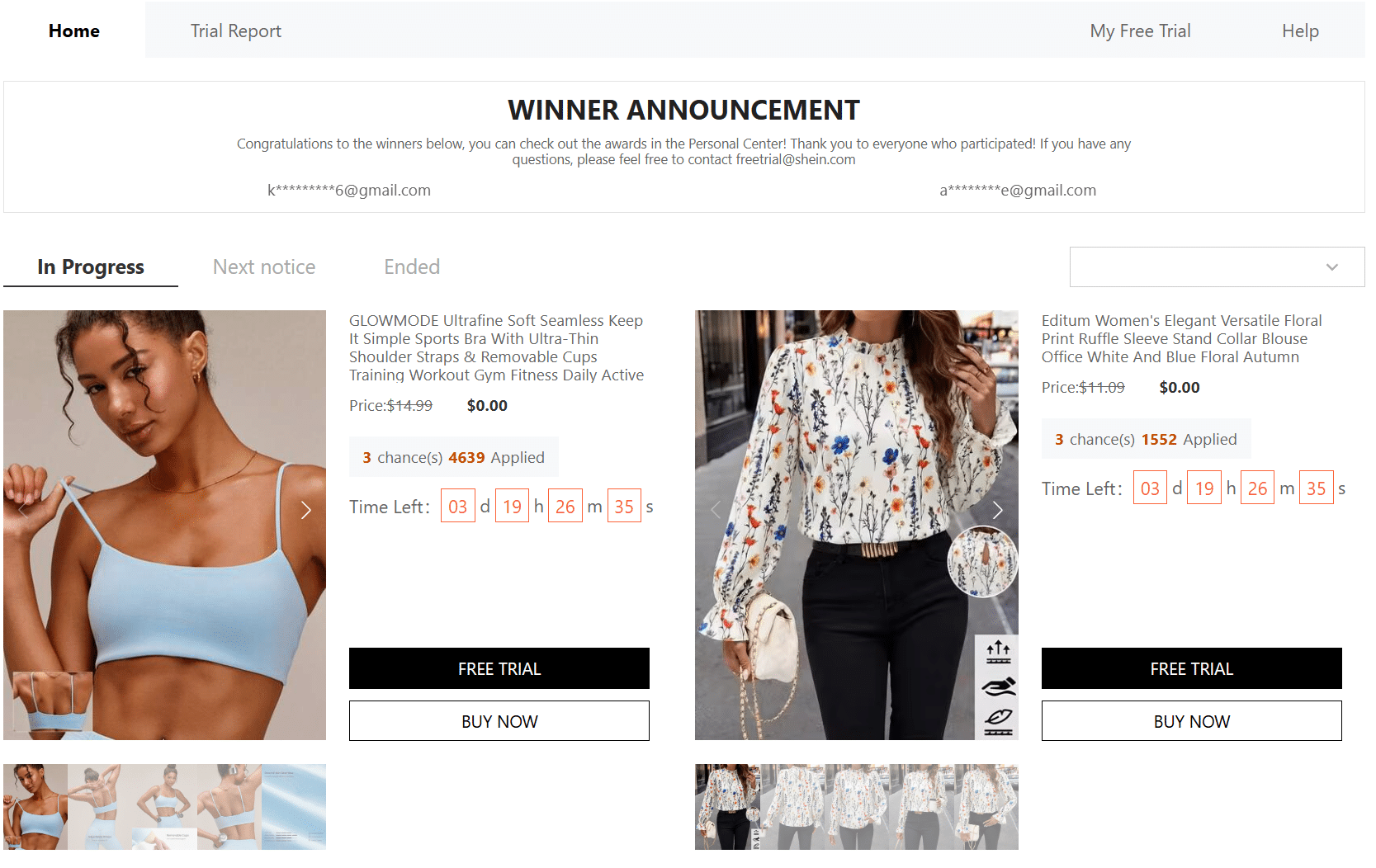
3. Product Characteristics That May Matter During Evaluation
The purpose of a product evaluation is to communicate meaningful observations about an item after it has been examined or used under appropriate conditions.
What deserves attention depends heavily on the product category.
Assessing a jacket, for example, involves different considerations than evaluating a cosmetic accessory, a household organizer, or another everyday item.
When the review instructions allow, participants may discuss characteristics such as:
- Build and finish: Examine visible workmanship, assembly, finishing details, and whether the product appears properly constructed.
- Material characteristics: Describe relevant physical qualities, including fabric feel, thickness, flexibility, texture, seams, or surface treatment.
- Size and proportions: For wearable merchandise, explain whether dimensions, length, and overall fit correspond with the selected variation and published description.
- Wearability and comfort: Discuss how the item feels during appropriate everyday activities, including any noticeable restrictions or discomfort.
- Visual presentation: Compare relevant details such as color, shape, styling, and appearance with the information shown in the original listing.
- Practical operation: Explain whether the item is straightforward to handle, operate, maintain, or incorporate into its intended use.
- Functional results: Describe what happened when the product was used for its advertised purpose, without claiming results beyond those actually observed.
- Condition after use: When the evaluation period allows, mention visible wear, changes in shape, washing results, or other developments observed during normal handling.
A review does not need to address every possible characteristic. The most relevant observations are those supported by the product itself and the participant’s actual experience.
When a feature cannot reasonably be assessed, it is better to leave it unjudged than provide an unsupported conclusion.
3.1 Writing an Evaluation That Provides Meaningful Detail
The value of a product review comes from the information it communicates, not simply from whether the reviewer liked the item.
Broad statements such as “excellent product” or “poor quality” may express an opinion, but they offer little explanation about the experience behind that judgment.
A more informative evaluation identifies particular observations. For clothing, that might include the garment’s fit, how the fabric behaves during movement, whether the measurements seem accurate, and how the item compares with its product description.
To make feedback clearer and more dependable, consider these practices:
- Describe the experience in your own language rather than reproducing advertising text or other customers’ opinions
- Include favorable impressions and shortcomings when both were genuinely observed
- Support general opinions with concrete examples about the product’s characteristics or behavior
- Limit your conclusions to functions and features you have personally examined
- Distinguish individual preferences, such as color or style, from observable issues such as incorrect dimensions
- Explain any difficulties factually, without overstating their severity or presenting assumptions as verified findings
The length of the testing period also matters. An item worn once cannot reasonably support conclusions about how it will perform after months of regular use.
Similarly, reviewers should not imply that they evaluated features or conditions they did not encounter.
An effective assessment aims for accuracy, clarity, and enough context to help readers understand how the item performed in the circumstances described.
4. Creating Appropriate Visual Evidence for Product Feedback
Written observations can communicate many aspects of a product, but images may provide additional context when the program permits them.
Photographs can be especially helpful for illustrating visible details, showing proportions, or demonstrating how an item looks in an ordinary setting.
The usefulness of an image depends more on its accuracy and clarity than on elaborate presentation.
Depending on the merchandise and the applicable instructions, suitable photographs might show:
- A complete, unobstructed view that makes the item’s overall appearance easy to recognize
- Detailed views of fabric, surfaces, construction, seams, closures, or other noteworthy characteristics
- The merchandise positioned or used in a setting consistent with its normal purpose
- Different perspectives that clarify dimensions, physical features, proportions, or how a product operates
Images should reflect the item’s genuine condition. Editing that conceals defects, exaggerates results, or changes important product characteristics can give viewers an inaccurate impression.
Privacy also deserves attention during photography.
Check the surroundings before taking or submitting a picture. Documents, address labels, financial records, identification information, private conversations, and other personal details should not be exposed unintentionally.
If other individuals appear in a photograph, consider their privacy and obtain appropriate permission. Take particular care when images could reveal information about children.
The official review instructions should determine whether photographs are required, which formats are accepted, and what content is appropriate to submit.
5. Protecting Your Information During the Application Process
Product trial applications may involve sharing information that helps an organization determine eligibility, identify the correct product variation, or arrange delivery.
Although certain details can be necessary for these purposes, applicants should understand where their information is going and whether the request is appropriate.
An unfamiliar message claiming to offer a product trial should not be treated as authentic solely because it includes a recognizable brand name or product image.
Fraudulent pages and misleading communications can imitate legitimate services. Verification is particularly important before entering personal information or following instructions from an unexpected source.
Use the following precautions when considering an opportunity:
- Access the program through SHEIN’s verified website or official application rather than an unfamiliar promotional link
- Identify the party requesting your details and confirm its connection to the opportunity
- Consult the relevant privacy notices to understand how submitted information may be collected and used
- Keep account passwords, authentication codes, and other login credentials private
- Remove addresses, phone numbers, shipping labels, and other identifying details from publicly visible evaluations
Be especially careful with requests for unexpected fees, sensitive credentials, or information unrelated to the stated purpose of the trial.
If any instruction appears inconsistent with the official program, confirm its legitimacy through the company’s established support resources before proceeding.
6. Distinguishing Independent Guidance From SHEIN’s Official Rules
Educational resources can help shoppers understand common features of product evaluation programs and identify questions worth asking before applying.
However, an explanatory article should not be mistaken for an official invitation, application portal, or confirmation of eligibility.
This website publishes independent informational material. It does not administer SHEIN product trials, approve applicants, distribute merchandise, determine review outcomes, or manage benefits associated with the company’s programs.
The existence of an informational guide also does not establish that a particular product is currently available for testing.
For authoritative instructions, users should consult the information published or directly confirmed by SHEIN through its recognized website, mobile application, support services, and applicable program documentation.
Before submitting an application, verify these essential points:
- Whether the opportunity can be found through a legitimate company-operated website or application
- Whether the program administrator is clearly identified and can be authenticated
- Whether official participation conditions explain who may submit a request
- Whether the selected merchandise and relevant product variations are currently offered
- Whether application dates, review responsibilities, and other required actions are clearly described
Independent guidance is useful for preparation and general understanding. It cannot replace the individual terms governing an actual opportunity.
If instructions found in an article differ from the latest rules displayed by the official platform, applicants should rely on the verified program information.
7. Maintaining Reasonable Expectations About Trial Opportunities
Product trials are not equivalent to ordinary retail transactions, and applicants should not expect every request to result in merchandise being delivered.
The number of available items can be limited, while the number of interested shoppers may be substantially higher.
Different products may also have different intended audiences, qualification conditions, and evaluation needs.
Keep the following considerations in mind:
- An application represents a request for consideration, not a confirmed product allocation.
- Satisfying the published qualifications does not ensure that an applicant will be chosen.
- The merchandise offered through trial listings may be updated, replaced, or become unavailable.
- Eligibility and product access can differ between accounts depending on the applicable conditions.
- Approval for one trial should not be interpreted as a promise of acceptance into later opportunities.
- Additional incentives, including promotional credits or other benefits, should only be expected when explicitly described in the relevant official terms.
The safest approach is to evaluate each listing independently and avoid making decisions based on assumed benefits or outdated descriptions.
Reviewing the latest requirements can help establish a clearer understanding of what participation actually involves.
8. Frequently Asked Questions About SHEIN Product Trials
Q: If my account meets the stated conditions, am I automatically approved?
A: No. Meeting the necessary qualifications may allow your application to be considered, but acceptance can still depend on available inventory and the criteria used for the individual opportunity.
Q: Which details are worth discussing after testing a product?
A: Describe characteristics relevant to the merchandise and your firsthand experience. Depending on the item, these could include workmanship, sizing, material feel, everyday comfort, design accuracy, functionality, and observed changes after use.
Q: Are photographs mandatory when submitting feedback?
A: Image requirements depend on the particular trial. Some opportunities may request supporting photographs, while others may use different evaluation formats. Consult the official instructions before submitting a review.
Q: What is the best way to confirm that an application opportunity is genuine?
A: Look for the relevant information within SHEIN’s official digital services or contact its authorized support channels. Do not rely exclusively on third-party posts, unfamiliar messages, or promotional claims.
Q: Will the same application rules apply to every product?
A: Not necessarily. Requirements may differ according to merchandise type, available variations, eligible locations, participation periods, fulfillment arrangements, and other campaign-specific conditions.
9. Final Thoughts: Making an Informed Decision Before Applying
SHEIN product trials may provide an opportunity for eligible shoppers to evaluate merchandise, but understanding the applicable conditions is an important part of the process.
Before requesting consideration, examine the current listing, check whether your account qualifies, verify the accuracy of your delivery information, and identify any responsibilities associated with participation.
If approved, approach the evaluation as an opportunity to document your actual experience. Clear observations about material characteristics, sizing, construction, practical performance, and other relevant details can produce more meaningful feedback.
Supporting images, when permitted, should portray the merchandise accurately while protecting personal information and respecting the privacy of others.
Above all, remember that applying and being selected are different outcomes. Product quantities, approval procedures, additional benefits, and future opportunities can change, and no particular result should be presumed.
Use independent resources to understand the general process, but confirm application instructions and current availability through the company’s official channels before taking action.
Ready to Explore Official SHEIN Product Trial Details?