Food Allergies vs. Intolerances: Your 2026 Comprehensive Guide

Understanding Food Allergies and Intolerances: A 2026 Guide for Safe and Healthy Eating
In an increasingly complex food landscape, distinguishing between food allergies and intolerances has become more crucial than ever. For many, a simple meal can turn into a health crisis, while for others, it might just lead to discomfort. As we navigate 2026, understanding these distinctions is paramount for maintaining optimal health, making informed dietary choices, and ensuring safety for ourselves and our loved ones. This comprehensive guide aims to demystify the differences, delve into common triggers, explore diagnostic methods, and provide practical strategies for managing both conditions effectively. Whether you’re personally affected, caring for someone who is, or simply seeking to broaden your knowledge, this article will equip you with the essential insights needed to navigate the world of food sensitivities with confidence.
The Fundamental Difference: Food Allergies vs. Intolerances
While often used interchangeably, food allergies and intolerances are distinctly different conditions with varying physiological mechanisms, symptoms, and potential severities. Recognizing these differences is the first step toward proper management and prevention of adverse reactions. Let’s break down what sets them apart.
What is a Food Allergy?
A food allergy is an immune system response. When you have a food allergy, your body mistakenly identifies a harmless food protein as a threat. Upon exposure, your immune system releases antibodies, primarily immunoglobulin E (IgE), to combat this perceived invader. This triggers a cascade of chemical reactions, including the release of histamine, which leads to immediate and sometimes life-threatening symptoms. Even a tiny amount of the offending food can provoke a severe allergic reaction.
Common Food Allergens:
- Milk: Particularly cow’s milk, common in infants and young children.
- Eggs: Another common allergy in children, often outgrown.
- Peanuts: One of the most common and severe food allergies.
- Tree Nuts: Almonds, walnuts, cashews, pecans, etc. (often lifelong).
- Soy: Found in many processed foods.
- Wheat: Can be confused with celiac disease, but is an immune response to wheat proteins.
- Fish: Tuna, salmon, cod, etc.
- Shellfish: Shrimp, crab, lobster (often severe and lifelong).
These eight allergens account for about 90% of all food allergic reactions, though other foods can also cause allergies.
What is a Food Intolerance?
In contrast, a food intolerance does not involve the immune system. Instead, it’s a digestive system response, meaning your body has difficulty digesting a particular food or a component within it. This is usually due to a lack of an enzyme needed to break down the food, sensitivity to certain food additives, or pharmacological effects of food components. Symptoms of food intolerance are generally less severe than allergies and often delayed, appearing hours after consumption. The amount of food consumed typically correlates with the severity of the symptoms, meaning small amounts might be tolerated.
Common Food Intolerances:
- Lactose Intolerance: Inability to digest lactose, the sugar in milk, due to a deficiency of the enzyme lactase.
- Gluten Sensitivity (Non-Celiac Gluten Sensitivity): Digestive and other symptoms after consuming gluten, without the autoimmune damage seen in celiac disease.
- FODMAP Intolerance: Sensitivity to Fermentable Oligosaccharides, Disaccharides, Monosaccharides, and Polyols, which can cause digestive distress in individuals with Irritable Bowel Syndrome (IBS).
- Sulfite Sensitivity: Reactions to sulfites, often used as preservatives in dried fruits, wines, and some processed foods.
- Histamine Intolerance: Inability to properly break down histamine in foods due to a deficiency in diamine oxidase (DAO) enzyme.
- Caffeine Sensitivity: Over-sensitivity to the stimulant effects of caffeine.
Symptoms: How to Differentiate Between Food Allergies and Intolerances
Understanding the symptom profiles for food allergies and intolerances is critical for identifying potential issues and seeking appropriate medical advice. While some symptoms may overlap, key distinctions can guide you.
Symptoms of Food Allergies:
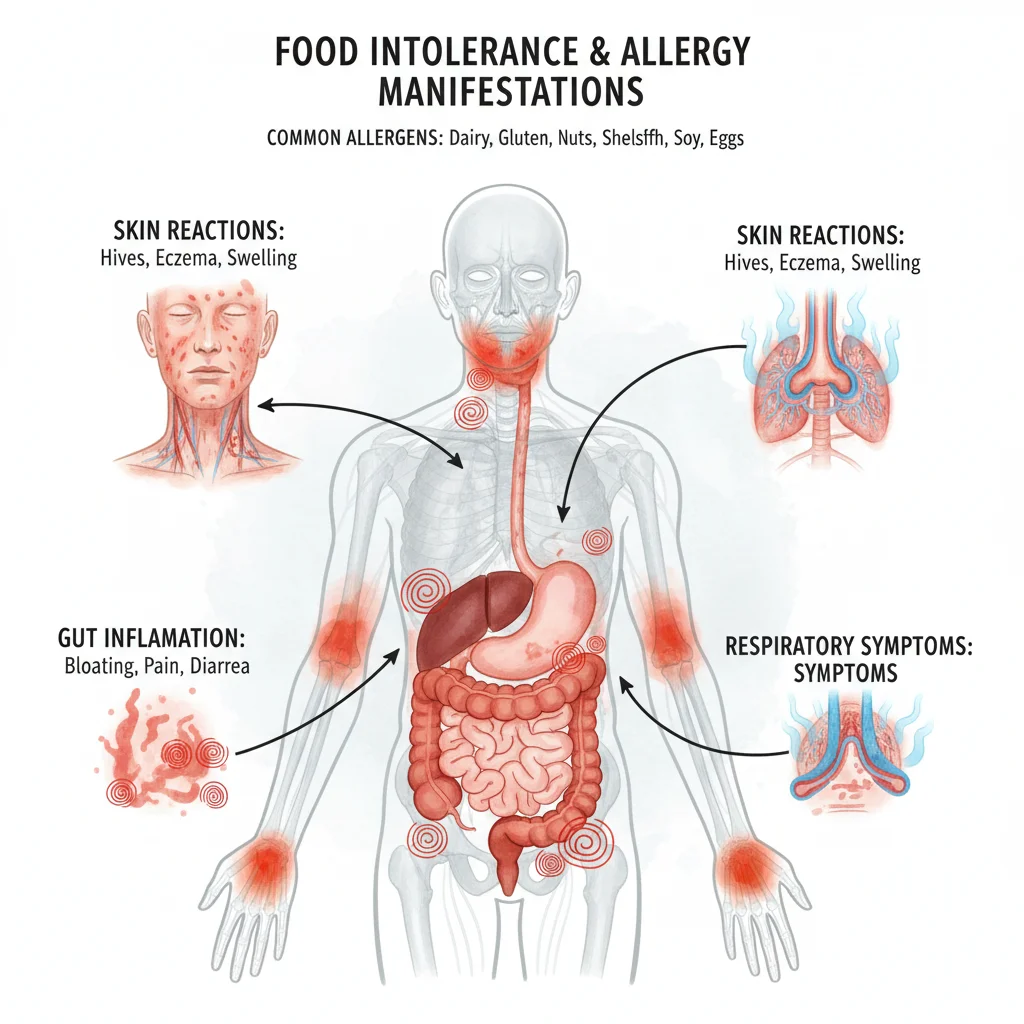
Allergic reactions are typically rapid, appearing within minutes to two hours of exposure. They can affect multiple body systems and range from mild to severe, even life-threatening. The severity of allergic reactions can vary with each exposure, and a mild reaction once does not guarantee future mild reactions.
Common Allergic Symptoms:
- Skin: Hives (urticaria), redness, swelling (angioedema), itching, eczema flare-ups.
- Respiratory: Wheezing, shortness of breath, coughing, nasal congestion, runny nose, difficulty breathing.
- Gastrointestinal: Abdominal pain, vomiting, diarrhea, nausea.
- Cardiovascular: Dizziness, lightheadedness, fainting, drop in blood pressure.
- Other: Swelling of the lips, face, tongue, or throat; tingling in the mouth.
Anaphylaxis: This is a severe, potentially life-threatening allergic reaction that requires immediate medical attention. Symptoms can include a sudden drop in blood pressure, severe shortness of breath, rapid or weak pulse, loss of consciousness, and widespread hives. Epinephrine (an EpiPen) is the first-line treatment for anaphylaxis.
Symptoms of Food Intolerances:
Symptoms of food intolerance are generally less dramatic, often confined to the digestive system, and can be delayed by several hours or even a day after consuming the offending food. They are rarely life-threatening.
Common Intolerance Symptoms:
- Gastrointestinal: Bloating, gas, abdominal pain, diarrhea, constipation, nausea, cramping.
- Other (less common but possible): Headaches, migraines, fatigue, general malaise, irritability, skin issues like acne or eczema (though less direct than allergic skin reactions).
The key takeaway is the involvement of the immune system and the rapidity/severity of the reaction. If you suspect an allergy, immediate medical consultation is vital. For intolerances, while uncomfortable, they are generally not an emergency.
Diagnosis: Uncovering Your Sensitivities to Food Allergies and Intolerances
Accurate diagnosis is paramount for managing food allergies and intolerances. Self-diagnosis can be misleading and potentially dangerous, especially with allergies. Always consult with a healthcare professional, such as an allergist or gastroenterologist, to get a definitive diagnosis.
Diagnosing Food Allergies:
Diagnosing a food allergy typically involves a combination of medical history, physical examination, and specific tests.
- Medical History and Physical Exam: Your doctor will ask detailed questions about your symptoms, when they occur, what foods you suspect, and family history of allergies.
- Skin Prick Test (SPT): Small amounts of suspected allergens are pricked onto the skin, usually on the forearm or back. A positive reaction (a raised, red welt or hive) indicates the presence of IgE antibodies to that food.
- Blood Test (Specific IgE Blood Test/RAST Test): This measures the amount of IgE antibodies to specific foods in your blood. Higher levels indicate a greater likelihood of allergy, but results must be interpreted in conjunction with clinical symptoms.
- Oral Food Challenge (OFC): Considered the gold standard for diagnosing food allergies, this involves consuming small, increasing amounts of the suspected allergen under strict medical supervision. It is done in a controlled environment where emergency equipment is available. This test is crucial for confirming or ruling out an allergy when other tests are inconclusive.
- Elimination Diet: While not a diagnostic test on its own for allergies, it can help identify potential triggers. Under medical guidance, suspected foods are removed from the diet for a period and then reintroduced, observing for symptoms.
Diagnosing Food Intolerances:
Diagnosing food intolerances is often more challenging as there are fewer definitive tests compared to allergies. The process heavily relies on symptom tracking and elimination diets.
- Symptom Diary: Keeping a detailed record of foods eaten and any subsequent symptoms can help identify patterns and potential trigger foods.
- Elimination Diet: This is the most common approach. Under the guidance of a dietitian or doctor, suspected foods are completely removed from the diet for a period (e.g., 2-4 weeks) until symptoms resolve. Then, foods are reintroduced one by one to see which ones trigger symptoms.
- Hydrogen Breath Test: Used to diagnose lactose intolerance and fructose malabsorption. After consuming a specific sugar (lactose or fructose), the amount of hydrogen in the breath is measured. High levels indicate malabsorption.
- Biopsy (for Celiac Disease): While celiac disease is an autoimmune condition, not a true allergy or simple intolerance, it’s often discussed alongside gluten issues. A small bowel biopsy is required to confirm the diagnosis, showing damage to the villi.
- Genetic Testing: Some genetic markers can indicate a predisposition to certain intolerances (e.g., for lactase persistence), but these are not always definitive for symptom development.
It’s important to note that many commercial tests for food intolerances (e.g., IgG blood tests) are not scientifically validated and are not recommended by major medical organizations. Always rely on evidence-based diagnostic methods.
Managing Food Allergies and Intolerances: Strategies for a Healthy Life
Living with food allergies and intolerances requires careful management, but it doesn’t mean sacrificing a healthy and enjoyable life. With the right strategies, individuals can effectively navigate their dietary restrictions.
Managing Food Allergies:
The cornerstone of food allergy management is strict avoidance of the allergen. This requires vigilance and proactive measures.
- Strict Avoidance: Carefully read all food labels every time you buy a product, as ingredients can change. Be aware of cross-contamination in kitchens, restaurants, and shared food spaces.
- Educate Others: Inform family, friends, school staff, and caregivers about your allergy and how to respond in an emergency.
- Carry Emergency Medication: If prescribed, always carry an epinephrine auto-injector (e.g., EpiPen, Auvi-Q) and know how to use it. Wear a medical alert bracelet or necklace.
- Restaurant Dining: Communicate clearly with restaurant staff about your allergy. Choose restaurants that are knowledgeable and accommodating.
- Meal Preparation: Cook at home more often to control ingredients. Use separate cutting boards, utensils, and cooking surfaces to prevent cross-contamination.
- Support Groups: Connect with others who have food allergies for shared experiences, tips, and emotional support.
- Regular Follow-ups: Maintain regular appointments with your allergist to discuss management strategies, new research, and potential changes in your allergy status.
Managing Food Intolerances:
Management of food intolerances often involves identifying your personal threshold and modifying your diet accordingly.
- Identify Your Threshold: Unlike allergies, many people with intolerances can consume small amounts of the trigger food without symptoms. Through careful tracking, you can learn your personal tolerance level.
- Dietary Modification: Once trigger foods are identified, you can reduce or eliminate them from your diet. Work with a registered dietitian to ensure your diet remains nutritionally complete.
- Enzyme Supplements: For conditions like lactose intolerance, over-the-counter lactase enzyme supplements can help digest lactose.
- Symptom Management: Over-the-counter medications can sometimes help manage specific symptoms (e.g., anti-diarrheals for diarrhea, antacids for indigestion), but these don’t address the root cause.
- Read Labels Carefully: While not as life-threatening as allergies, understanding ingredients is still crucial for intolerances. Look for terms like ‘lactose-free’ or ‘gluten-free’ if applicable.
- Mindful Eating: Pay attention to how different foods make you feel. Stress can also exacerbate digestive symptoms, so stress management techniques can be beneficial.

Living Safely and Healthily with Dietary Restrictions in 2026
The landscape of food production and consumption is constantly evolving. In 2026, there are more resources and options available than ever before for individuals managing food allergies and intolerances.
Technological Advances:
- Food Labeling Apps: Mobile applications that scan barcodes and highlight allergens or problematic ingredients are becoming more sophisticated and accurate.
- Restaurant Allergy Platforms: Digital platforms and apps help diners find restaurants with clear allergy protocols and menus.
- Wearable Tech: Emerging technologies include wearable devices that can detect traces of allergens in food, offering an extra layer of security.
The Rise of Allergen-Friendly Products:
Supermarket shelves are increasingly stocked with ‘free-from’ products – gluten-free, dairy-free, nut-free, and more. This makes it easier to find safe and delicious alternatives for almost any dietary restriction.
Advocacy and Awareness:
Increased public awareness and advocacy from organizations mean better understanding and accommodation in schools, workplaces, and public spaces. Legislation is also continually evolving to improve food labeling and safety standards.
Nutritional Considerations:
When eliminating entire food groups due to allergies or intolerances, it’s vital to ensure you’re still getting all necessary nutrients. Consulting with a registered dietitian is highly recommended to develop a balanced and healthy meal plan that meets your specific needs. They can help identify potential nutrient deficiencies and recommend appropriate substitutions or supplements.
Conclusion: Empowering Your Dietary Choices
Navigating the world with food allergies and intolerances can seem daunting, but with accurate information, proper diagnosis, and effective management strategies, it is entirely possible to lead a full, healthy, and vibrant life. The key lies in understanding the fundamental differences between these conditions, recognizing their unique symptoms, seeking professional medical advice for diagnosis, and implementing personalized management plans. As we move further into 2026, the resources, technologies, and awareness surrounding food sensitivities continue to grow, empowering individuals to make safer and healthier dietary choices. Stay informed, stay vigilant, and never hesitate to advocate for your health and well-being. Your journey to safe and healthy eating begins with knowledge and proactive care.